
RING ROAD 4: A CATALYST FOR THE SOUTHERN INDUSTRIAL LOGISTICS ECOSYSTEM
Nam Thuan Industrial Park Positioned to Benefit from a New Era of Regional Connectivity
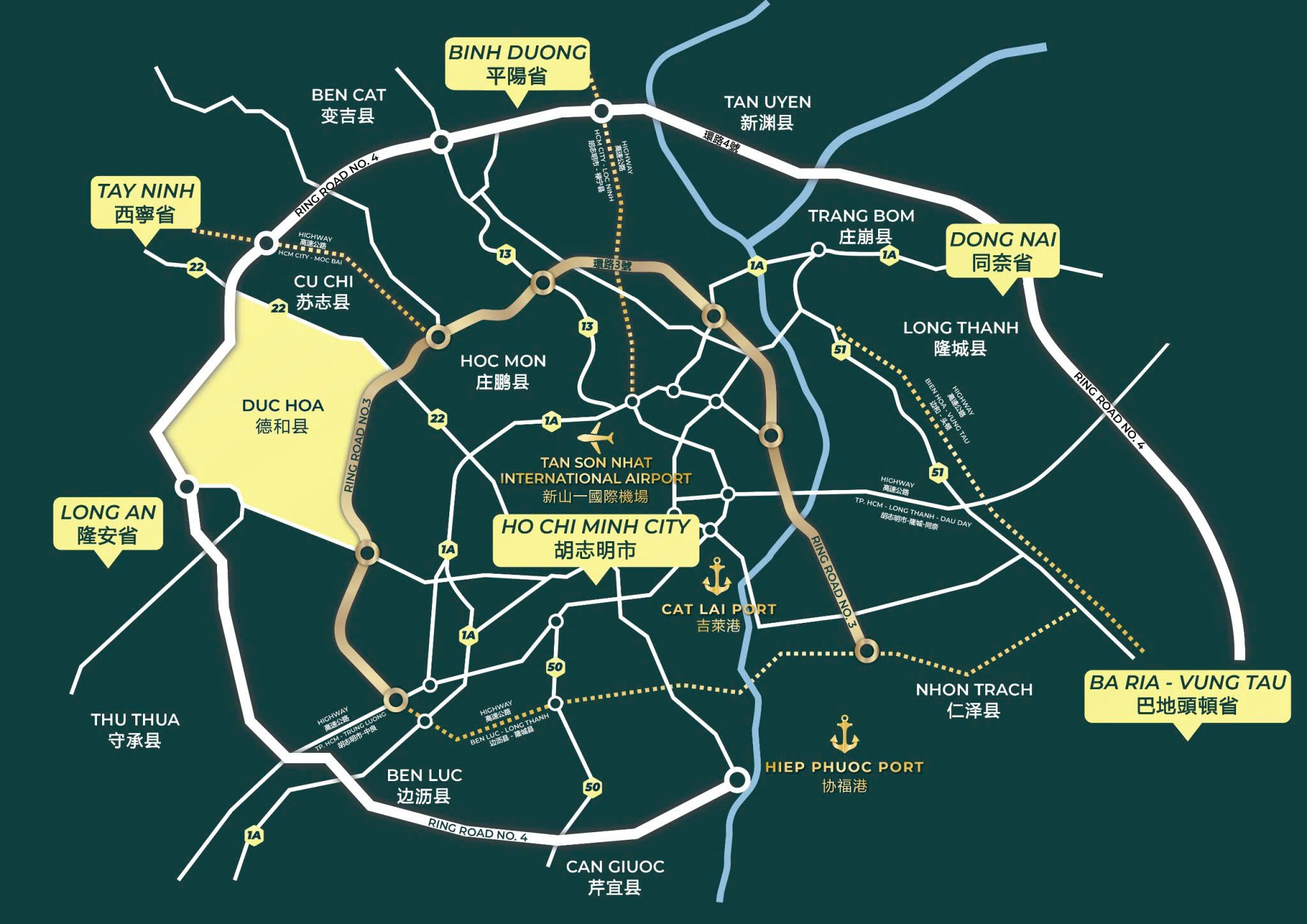
As foreign direct investment (FDI) continues to flow into Vietnam, regional transportation infrastructure has become a key factor in enhancing the competitiveness of industrial hubs. Among the country’s major infrastructure developments, Ring Road 4 is expected to become a powerful catalyst for Southern Vietnam’s logistics network, strengthening connectivity between industrial centers, seaports, airports, and international border gates.
Located in Duc Hoa District, Nam Thuan Industrial Park is one of the strategic industrial developments expected to directly benefit from this transformative infrastructure project.
Ring Road 4 – The Backbone of Regional Logistics
Ring Road 4 is far more than a solution to urban traffic congestion. It is envisioned as a strategic economic corridor connecting provinces throughout the Southern Key Economic Region and the Mekong Delta.
Once completed, Ring Road 4 will establish an efficient regional logistics network, allowing freight from surrounding industrial parks to bypass traffic bottlenecks within Ho Chi Minh City and connect directly with major transportation gateways, including:
- International seaport clusters, including Hiep Phuoc Port, Cat Lai Port, and Cai Mep – Thi Vai Port.
- International airports, including Tan Son Nhat International Airport and Long Thanh International Airport.
- International border gates facilitating trade with Cambodia.
This enhanced connectivity is expected to significantly improve logistics efficiency while supporting regional economic integration.
Nam Thuan Industrial Park: Capitalizing on a Strategic Infrastructure Location
Invested by Dai Loc Long An JSC and developed by Hai Son Group, Nam Thuan Industrial Park spans 308 hectares and occupies a strategic gateway location within one of Southern Vietnam’s fastest-growing industrial corridors.
The development of Ring Road 4, together with the project’s existing transportation infrastructure, is expected to create significant synergies in regional connectivity.
Multi-Directional Transportation Connectivity
Nam Thuan Industrial Park benefits from direct access to two of Duc Hoa’s most important transportation corridors:
- DT823D, the Northwest Development Corridor providing direct access to Ho Chi Minh City.
- DT823B, connecting directly to Xuyen A Industrial Park and surrounding industrial zones.
Combined with Ring Road 4, these strategic transport routes will substantially enhance regional connectivity and reduce travel times between Nam Thuan Industrial Park and key economic centers.
Optimizing Business Operating Costs
Improved transportation efficiency is expected to shorten delivery times while reducing logistics-related expenses, including transportation, fuel consumption, and fleet operation costs.
These improvements will help businesses optimize supply chain performance, enhance operational efficiency, and strengthen long-term competitiveness in both domestic and international markets.

Accelerating a Sustainable Industrial–Urban Ecosystem
Hai Son Group remains committed to sustainable industrial development.
The introduction of Ring Road 4 further strengthens Nam Thuan Industrial Park’s integrated development model, complementing its synchronized infrastructure and commitment to maintaining extensive green spaces while creating new opportunities for industrial growth.
Smart Logistics and Modern Warehousing
As regional transportation capacity expands, demand for smart logistics services and modern warehousing facilities is expected to increase, enabling faster and more efficient goods movement throughout Southern Vietnam.
Supporting Urban Amenities
Improved accessibility to Ho Chi Minh City will also encourage the development of surrounding residential communities and supporting urban services, making the area increasingly attractive to experts, engineers, and skilled workers seeking a convenient place to live and work.
Conclusion
The coordinated development of strategic infrastructure projects such as Ring Road 4 is creating new opportunities for industrial parks across Southern Vietnam.
With its strategic location, completed infrastructure, and commitment to sustainable development, Nam Thuan Industrial Park is well positioned to support investors in optimizing supply chains, improving operational efficiency, and creating long-term value.
As regional connectivity continues to advance, Nam Thuan Industrial Park remains committed to providing a modern, reliable, and future-ready industrial destination for both domestic and international enterprises.